




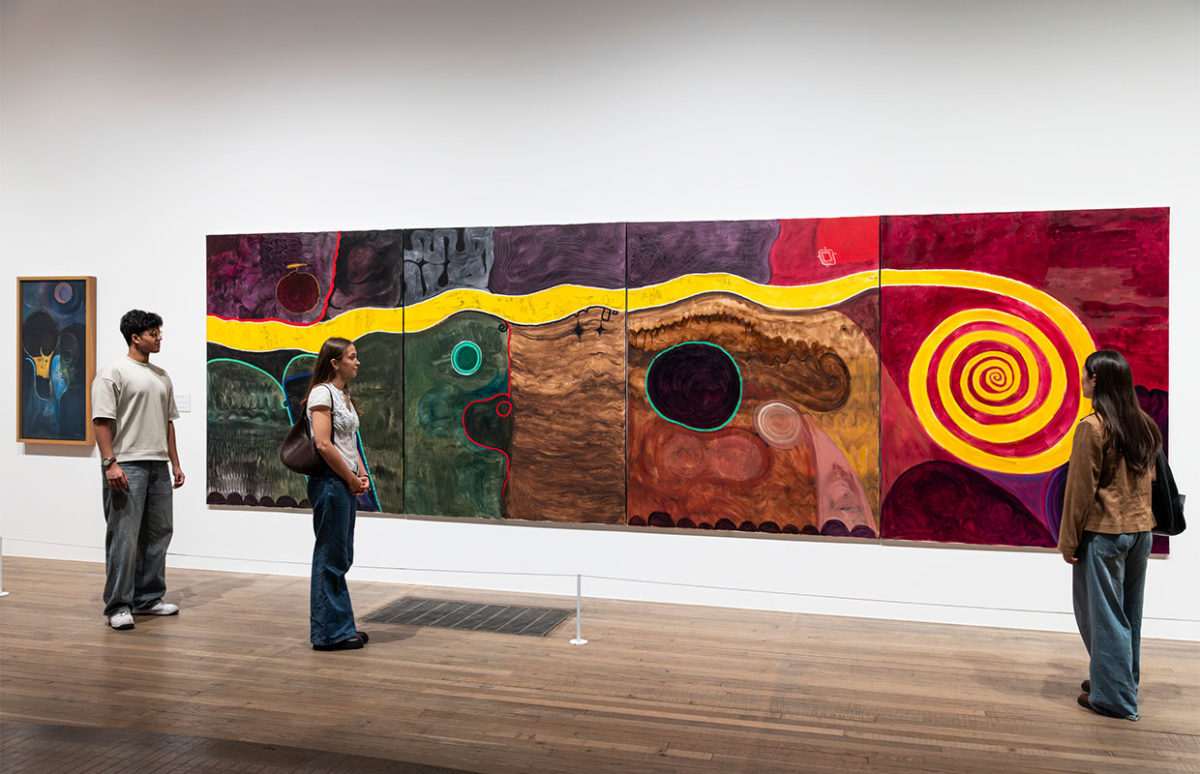
Nigeria, the hugely populous West African country, is famous for its contributions to fashion, cinema and literature. It also has a vibrant art scene and an exhibition at the Tate Modern in London offers an overview of 50 years of Modernist art in Nigeria, with artists from the country and around the world.
The exhibition spans the struggles for independence from Britain, independence, civil war, up to the present day.
The early period in the 1940s and 50s features a double perspective as artists from Nigeria trained in the West, where modernism in art and literature was itself informed by a fascination with African arts and cultures.
Independence in 1960 brought a period of optimism when artists participated in the quest for a national identity in a country which somewhat arbitrarily brought together more than 250 ethnic groups. In visual arts, the Natural Synthesis movement deliberately mixed modern western expression with indigenous art forms. In the university city of Ibadan, the Mbari Artists and Writers Club including authors Chinua Achebe and Wole Soyinka debated Pan-African ideas.
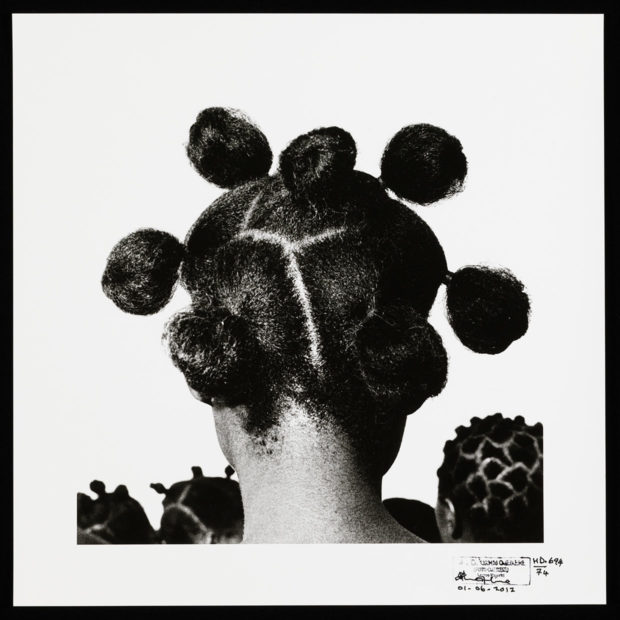
Many artists drew on Nigerian or wider African traditions. In the 1950s, J.D. Okhai Ojeikere, who was raised in a small village in rural southwestern Nigeria, used photography, a new medium in Nigeria, to document Nigerian culture. His Hairstyle Series includes nearly a thousand photographs, captures the intricate hairstyles worn by Nigerian women. You can view a selection on this Google Arts essay.
Ojeikere, commented, “All these hairstyles are ephemeral. I want my photographs to be noteworthy traces of them. I always wanted to record moments of beauty, moments of knowledge. Art is life. Without art, life would be frozen.”
©
The Nigerian Civil War (1967-1970) ended with the defeat of the Igbo Biafra region, which had seceded from Nigeria. The Nsukka Art School revived ‘uli’ - linear Igbo designs - traditionally passed down between women. Obiora Udechukwu's Our Journey (1993) is an example of this school.
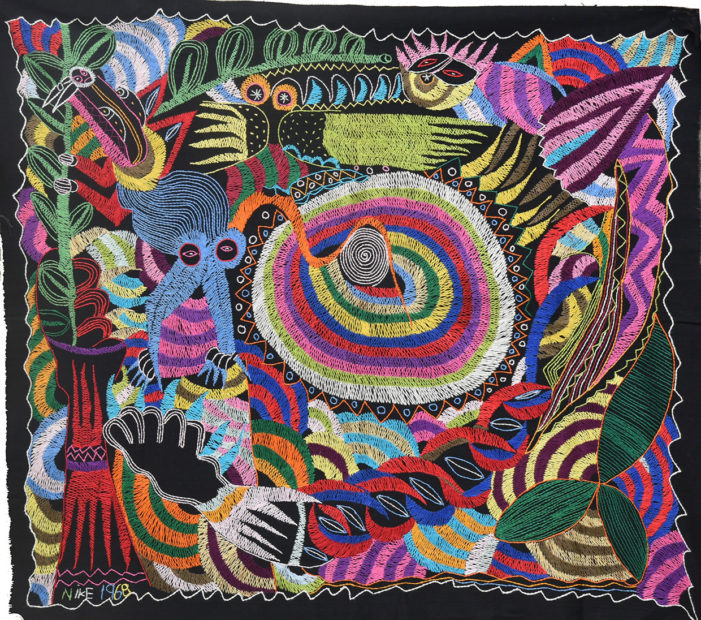
Nike Davies-Okundaye works in traditional batiks and textile designs passed down from her grandmother. She also promotes other Nigerian artists, having opened in 1983 the Nike Centre for Art and Culture just outside Lagos. It is one of Africa’s largest galleries with more than 8,000 artworks.
Nigeria around the World
Nigeria has a population of 233 million but also a vast diaspora settled around the world. Authors like Chimamanda Ngozi Adichie and Ben Okri, and artists like Yinka Shonibare have a double, inside-outside vision of their home country.
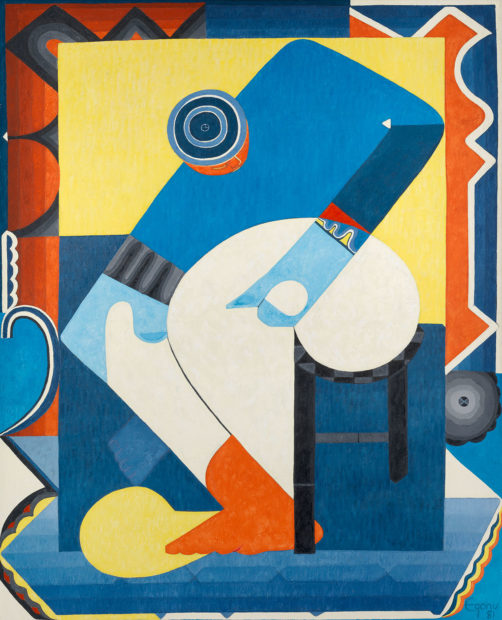
The last section of the exhibition is dedicated to Uzo Egonu, who is typical of these diaspora artists. He lived in the UK from the 1940s till his death in 1996. His Stateless People paintings series, begun in 1980, reflects on questions of nationhood and cultural identity. Each painting depicts a single figure, musician, artist or writer, emblematic of the growing visibility of Nigeria’s diaspora around the world.
Nigerian Modernism
Tate Modern
Till 11 May 2026
Copyright(s) :
J.D. Okhai Ojeikere, Untitled (Mkpuk Eba) 1974, printed 2012.
Uche Okeke, Fantasy and Masks c.1960. © The Prof Uche Okeke Legacy Limited and Asele Institute Ltd. Photo courtesy of Research and Cultural Collections University of Birmingham.
Uzo Egonu, Stateless People an artist with beret 1981. © The estate of Uzo Egonu. Private Collection.
Nike Davies-Okundaye, Animal World 1968. © Nike Davies Okundaye. Kavita Chellaram. Image courtesy of kó, Lagos.
Obiora Udechukwu, Our Journey 1993 © Obiora Udechukwu. Hood Museum of Art.
Bruce Onobrakpeya, The Last Supper 1981 © reserved. Tate Collection.
Tag(s) : "Africa" "arts and crafts" "Chimamanda Ngozi Adichie" "modernism" "Nigeria" "Tate Modern" "visual art"